
Computer Programming and Manufacturer Control
What do you get to keep when you buy a car?

Buying a car has never been a simple process but at least it used to be that when you bought a car you pretty much knew what you were getting. If you left the dealer driving a car with a V8 engine, turn signals, and heated seats, when you got it home your car would have a V8 engine, turn signals, and heated seats.
In today’s car buying world it is no longer that simple.
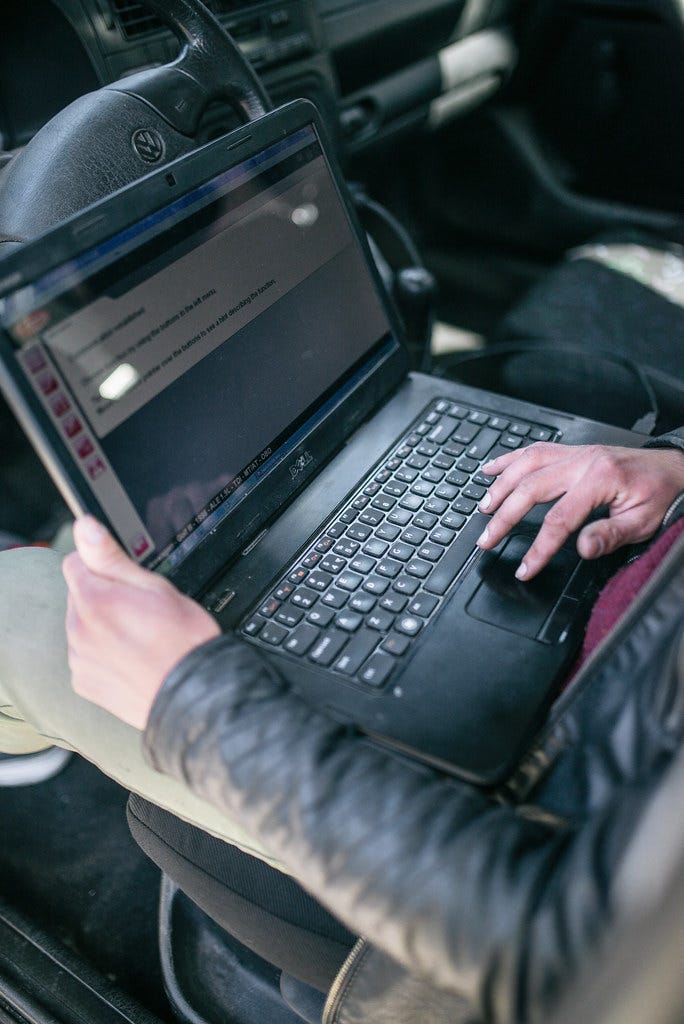
It is now possible to purchase a car that can warm your bum at the touch of a button and hit 200mph, drive it for a week, take it to the dealer for an oil change, and then come home with a significantly slower car that cannot warm you as quickly in frigid weather. This can happen not because the dealer removes hardware from your vehicle but because they can reprogram your car’s computer.
There are cases where this reprogramming can be beneficial to you as a consumer. For instance, sometimes a component in a specific model isn’t working quite as it should. Perhaps car makers (or government regulators) have been collecting real-world data and found that a certain car’s air bag deploys at times it shouldn’t. It may be that an adjustment to a computer program is all it takes to remedy the problem. That can save a lot of money compared to swapping out the entire air bag. Even if the car is under warranty or there is a mandatory recall and you wouldn’t pay a dime for the fix, a programming change instead of a hardware swap can mean your car is remedied in an hour rather than a couple days.
But there are also many scenarios that are disadvantageous to the consumer.
I once bought a used 2008 BMW only to discover that it had some engine troubles. The ultimate solution to the problem was to buy and install a new set of fuel injectors. There was nothing at all wrong with the fuel injectors in the car. They were the original components installed at the factory and they worked just fine… until a BMW dealer updated the engine’s computer program as part of a routine service. The new software was not compatible with the original injectors. I have no idea what the benefits to me were of the new computer program. But I do know I had to pay $3000 for new hardware to fix a car that worked just fine before the programming change. Evidently the company reprogrammed the entire run of this model one-at-a-time when they were brought in for service. Unfortunately, I didn’t know what many BMW enthusiasts already knew – that you shouldn’t buy a used one unless the previous owner had already paid to “update” the fuel injectors.
In the past decade, Tesla has found some enterprising new ways to use reprogramming to its advantage. It’s unclear what its current policies are but a couple years ago there were complaints from people who had purchased used Teslas with some of its most expensive options: “Ludicrous Mode” and “Autopilot.” Both of these options required specialized hardware and software and cost about $10,000 each. When second owners of these cars took their vehicles to be serviced, Tesla sometimes reprogrammed the car’s computer to disable these features. Tesla told complaining owners they would happily reinstall the software if they paid the full price for the option directly to the company. An owner might drop off their car to have a window defroster fixed and hours later drive a car away that was significantly slower and require $20,000 to be “repaired.” Tesla was basically arguing that since they didn’t sell you the options you didn’t have the right to have them.
A number of automakers are talking about (and likely already deploying) computer reprogramming for yet another purpose. It costs a significant amount of money to install different options on each car that comes off the assembly line. So there might ultimately be a cost savings to the manufacturer to install the hardware necessary for some options – like seat warmers – on all cars and then charge owners to activate them. Some EV manufacturers are looking to build battery packs into the frame and there’s been discussion of continuing to sell “long range” and “short range” versions of such a car by using computer programs to limit access to the full battery pack. So in the future you might buy a comparatively cheap “bare bones” car that carries around the extra weight of seat warmers or batteries that you’ll never use because it saved the manufacturer money to do it that way.
The ways in which manufacturers adjust the computers that are now crucial to our cars generate a lot of questions for consumers. Shouldn’t we have access to the equipment installed on cars we bought? Should we have to pay for the extra gas necessary to lug around the hardware for options we don’t want? Can we hack our computers and get access to things that seemingly belong to us? Don’t third parties have the right to sell to others what they had purchased themselves?
Some of these questions are already playing out in US courts. John Deere, famous manufacturer of tractors around the world, has had a policy of restricting access to the computer programs inside its products. John Deere has argued that while it sells tractors to farmers, it owns the programs that allow those tractors to run. It has used this “ownership” to restrict anyone other than a John Deere dealer from doing most repairs on a tractor. For instance, some farmers have sought to perform the relatively simple task of replacing a turn signal on their own tractor only to find that the tractor’s computer has to be asked to accept the new equipment. While they can plug a new light bulb into their tractor, they can’t flip a switch on its computer and thus had to pay their local dealer a significant amount to get their tractor running again. A few years ago a group of farmers filed a lawsuit against John Deere claiming that they had violated Sherman Anti-Trust Act by using its ownership of computer code to create a monopoly. The case is still working its way through the courts, but John Deere’s attempts to have it dismissed have not worked thus far.
Most new technologies are proudly proclaimed to bring new benefits and there is no doubt that adding new layers of computers in automobiles has yielded benefits for consumers. Thanks to computers cars now get better gas mileage, can turn on automatic wipers when it rains, and activate air bags in a split second. But whoever designs a technology gets an immense amount of control over what the benefits are and who gets ultimately gets the benefits. It is clear that many new automotive computer changes are being designed by manufacturers for the benefit of manufacturers. Some of their decisions are clearly not in the best interests of consumers. The rights of consumers and whether we will even be allowed to own a fully functioning automobile is in flux at the moment.
As if Musk isn't rich enough already. Thanks for the info.
Well, that was a revelation!